Travel announcements, service updates and offers from I-MANTRAA, your travel agency in Guwahati since 2004.
Update
Indian Railways: Why train seats and berths are mostly blue?
Indian Railways primarily uses blue seats and berths for psychological comfort, cleanliness, and practicality.
• Calming Effect: Blue is gentle on the eyes and creates a calm, steady atmosphere during long trips lasting 15 to 30+ hours.
• Hiding Stains: Dark blue effectively conceals dust and minor food stains caused by thousands of daily passengers.
• Durability and Cost: Blue fabrics hold up well under constant passenger movement and pressure, making them a durable, cost-effective choice for maintenance.
• Coach Differences: Blue is mostly used in traditional ICF coaches, whereas newer LHB coaches and modern trains like Vande Bharat use different seat colors based on the train type and travel class.
Update
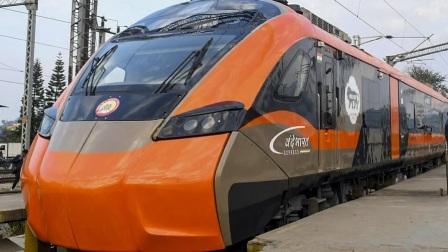
Vande Bharat Sleeper train features and ticket booking rules
The Vande Bharat Sleeper is a 16-coach semi-high-speed train with an 823-berth capacity that strictly permits only confirmed ticket holders to board and enforces tiered cancellation penalties.
Train Features & Coach Breakdown
• Development & Speed: Built by BEML using ICF Chennai technology, designed for a top operational speed of 180 kmph.
• Total Capacity: 16 coaches accommodating 823 passengers in total:
• AC First Class (1A): 1 coach (24 berths)
• AC Tier-2 (2A): 4 coaches (188 berths; ~47 per coach)
• AC Tier-3 (3A): 11 coaches (611 berths; ~55.5 per coach)
Boarding & Ticket Rules
• Confirmed Tickets Only: Only passengers with confirmed tickets are allowed to board.
• No RAC or Waitlist: Travellers holding RAC, waitlisted, or partially confirmed tickets are strictly barred from boarding.
Cancellation & Refund Policy
Cancellation fees for confirmed tickets depend on how far in advance the ticket is cancelled before scheduled departure:
• More than 72 hours before departure: 25% fare deduction.
• 72 hours to 8 hours before departure: 50% fare deduction.
• Less than 8 hours before departure: 100% fare forfeiture (no refund).
Update
Indian Railways’ parcel app
Indian Railways is launching the ‘Rail Parcel App – Ghar Se Ghar Tak’, a digital platform for Android, iOS, and web that will enable door-to-door parcel booking, doorstep pickup and delivery, and digital payments. Initially rolling out in eight major cities—Delhi, Mumbai, Kolkata, Chennai, Ahmedabad, Hyderabad, Bengaluru, and Pune—the service will utilize Logistics Service Partners (LSPs) to handle first- and last-mile operations, packaging, and storage. The app will feature comprehensive parcel tracking, automated updates, customer ratings, and MIS reports, allowing users to manage shipments through a single digital transaction after registering with a valid mobile number. While Zonal Railways await the official implementation date pending test runs by CRIS, the system is designed to allow customers to seamlessly select logistics partners and customize their fulfillment options, utilizing the same LSP when both doorstep pickup and delivery are selected.
India plans world's highest railway station in Rs 1.3 lakh crore project
India is planning a Rs 1.31 lakh crore, 489-km Bilaspur-Manali-Leh railway corridor, which could feature the world's highest railway station at Tengla in Ladakh. Situated at 17,244 feet (5,359 metres) above sea level, this proposed station would surpass China's Tanggula station by 188 metres. To safely navigate the extreme altitude, dropping oxygen levels, and freezing temperatures, trains will feature pressurized, heated cabins and provide special oxygen masks. Strategically located near the China border, the project will ensure year-round connectivity despite heavy snowfall, boosting local tourism, employment, and freight movement. Although a Detailed Project Report (DPR) has been completed, construction approval is still pending for the line, which presents massive engineering challenges—including complex geology and steep gradients—and will require 62 tunnels covering 55% (270 km) of the entire route.
No diesel, no overhead wires–how India’s hydrogen train actually works
India’s first hydrogen-powered passenger train, the "Namo Green Rail," was launched on July 17, 2026, on the Jind-Sonipat route in Haryana. Featuring a 10-coach configuration with a 2,400-kilowatt power output, the train serves as a clean alternative to traditional diesel locomotives.
Key takeaways from its technology and implementation include:
• Onboard Power Generation: Unlike traditional electric trains that rely on overhead wires, a hydrogen train acts as a self-contained electric train that generates its own power onboard.
• The Fuel Cell Process: Power is produced via a chemical reaction rather than combustion. A fuel cell splits stored hydrogen molecules into protons and electrons; the movement of these electrons through an external circuit creates an electric current that drives the traction motors.
• Zero Emissions: By combining hydrogen with oxygen from the air, the system only produces electricity, water, and heat, completely eliminating harmful exhaust.
While offering a sustainable solution, the infrastructure and conversion requirements mean hydrogen trains are optimized for specific railway routes rather than universal application.
This Indian railway bridge is taller than the Eiffel Tower!
The Chenab Rail Bridge is the world's highest railway arch bridge (359m above the river, 35m taller than the Eiffel Tower), located in Jammu & Kashmir's Reasi district as part of the 272-km USBRL project.
• Construction: Took 21 years (August 2004 – June 2025); the structural "Golden Joint" was completed on August 13, 2022, ahead of its inauguration by PM Modi on June 6, 2025.
• Specs: 1,315m long using 28,660 tonnes of steel.
• Capability: 120-year lifespan, resists earthquakes and 266 km/h winds, allowing train speeds up to 100 km/h.
India’s only railway station requiring passport, visa
The Attari Shyam Singh Railway Station in Punjab is India's only station that requires a passport and a valid visa for entry. Located near the international border, it served as the strict customs and immigration checkpoint for the Samjhauta Express to Pakistan, where being caught without documents meant immediate arrest. Although train services were suspended in 2019 due to diplomatic tensions, the area remains under tight surveillance by security forces.
Man misses train after it departs 2 hours early, railways, IRCTC told to pay Rs 15,000
The Ferozepur District Consumer Disputes Redressal Commission has ordered the Northern Railway, Konkan Railway, and IRCTC to pay a passenger a ticket refund of ₹10,620 and ₹5,000 in compensation after he and his family missed their June 10, 2024 train from Goa to Delhi due to an uncommunicated timetable change. The complainant found that the train had departed two hours early under a seasonal monsoon schedule, forcing him to purchase flight tickets instead. While the Railways blamed user negligence and pointed to station notice boards and its website, and IRCTC claimed to only handle online bookings, the commission ruled that merely mentioning a seasonal timetable is insufficient. Holding the parties liable for a deficiency in service, the panel emphasized that passengers have a right to timely, quality service and should not be subjected to the whims of the administration.
Indian Railways bans mobile charging in trains from 11 pm to 5 am
Indian Railways has directed all railway zones to switch off mobile phone and laptop charging points inside train coaches between 11 pm and 5 am. The Railway Board issued the instructions on October 26, following an incident in which a passenger’s power bank exploded during charging, filling a coach with smoke. The decision is aimed at reducing fire risks during overnight train journeys.